








In recent years, Building Information Modeling (BIM) has emerged as one of the most transformative technologies in the field of architecture. By creating intelligent, data-rich digital representations of buildings, BIM is changing the way architects design, visualize, and manage projects from concept to construction. Here’s a detailed look at how BIM is revolutionizing the architectural landscape.
What is BIM?
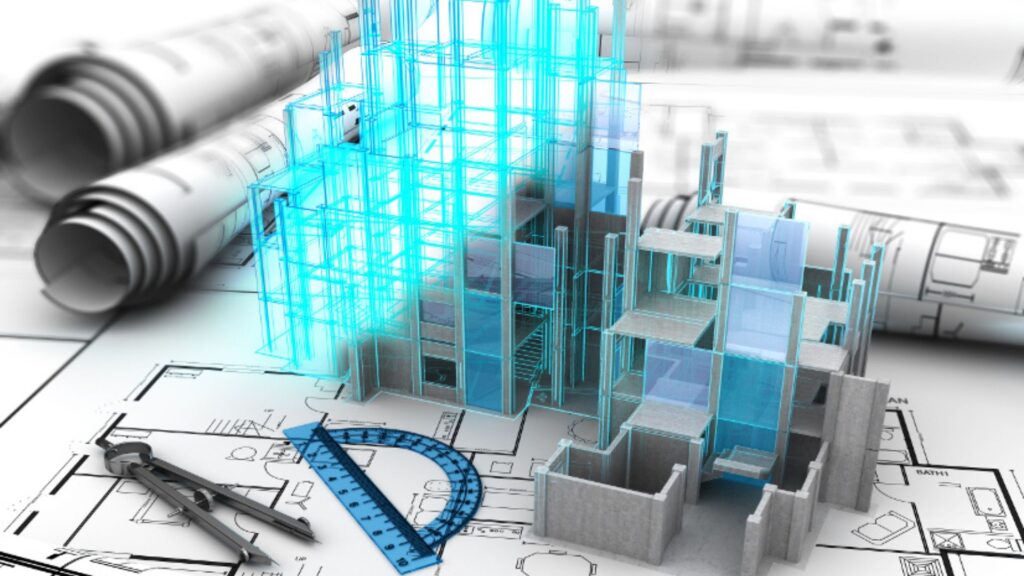
Building Information Modeling (BIM) is a digital process that involves creating and managing information for a built asset throughout its lifecycle. It uses 3D models enriched with data to represent the physical and functional characteristics of a facility.
Unlike traditional 2D drawings, BIM models include geometry, spatial relationships, geographic information, and quantities, enabling all stakeholders—from architects to engineers to contractors—to work from a single, coordinated platform.
Enhanced Design Accuracy and Visualization
One of the most immediate benefits of BIM is its ability to improve design precision. BIM allows architects to create highly detailed and accurate 3D models that simulate how a building will look and perform in the real world.
This includes:
-
Clash detection to prevent design conflicts (e.g., HVAC vs. structural beams)
-
Realistic visualizations for clients and stakeholders
-
Integration with virtual reality (VR) for immersive walkthroughs
This visual clarity greatly enhances communication, reduces revisions, and accelerates design approvals.
Improved Collaboration and Workflow Integration
BIM acts as a centralized information hub, allowing all professionals involved in a building project to collaborate in real time. Through cloud-based platforms, architects, structural engineers, MEP professionals, and contractors can access and edit the same model simultaneously.
Key advantages include:
-
Fewer miscommunications
-
Faster project delivery
-
Streamlined coordination across disciplines
This integrated workflow significantly reduces delays and costly mistakes during construction.
Cost and Time Efficiency
BIM helps identify potential issues early in the design phase, minimizing unexpected costs during construction. The ability to simulate construction sequencing (4D BIM) and cost estimation (5D BIM) provides stakeholders with deeper project insights.
Some cost-saving features:
-
Quantity takeoffs generated automatically from the model
-
Early detection of design conflicts
-
Accurate scheduling and resource planning
These capabilities result in more predictable budgets and timelines.
Lifecycle Management and Sustainability
Beyond the design and construction phases, BIM plays a vital role in facility management and operations. Data from BIM models can be used for maintenance schedules, energy performance tracking, and renovations.
Furthermore, BIM supports sustainable design by:
-
Simulating energy usage
-
Analyzing lighting and HVAC performance
-
Selecting eco-friendly materials
This ensures that buildings are not only efficient to build but also sustainable to operate.
Legal and Regulatory Compliance
BIM simplifies adherence to building codes and regulations. Many governments and public agencies worldwide are now mandating the use of BIM for large-scale infrastructure projects.
It ensures:
-
Regulatory compliance checks
-
Building code validation
-
Standardized documentation
This further reinforces BIM as a standard practice in modern architecture.
The Future of Architecture with BIM
As technologies like AI, IoT, and machine learning become more integrated with BIM, the possibilities are expanding. Predictive maintenance, smart buildings, and autonomous construction are on the horizon.
BIM is evolving from a design tool into a strategic asset that supports innovation across the entire built environment.
Conclusion
Building Information Modeling is not just a trend—it’s a revolution in architecture. From improving collaboration and reducing costs to enabling smarter, more sustainable buildings, BIM is reshaping the future of design and construction. As adoption continues to grow, architects who embrace BIM are better positioned to lead in a competitive, digital-first industry.


