








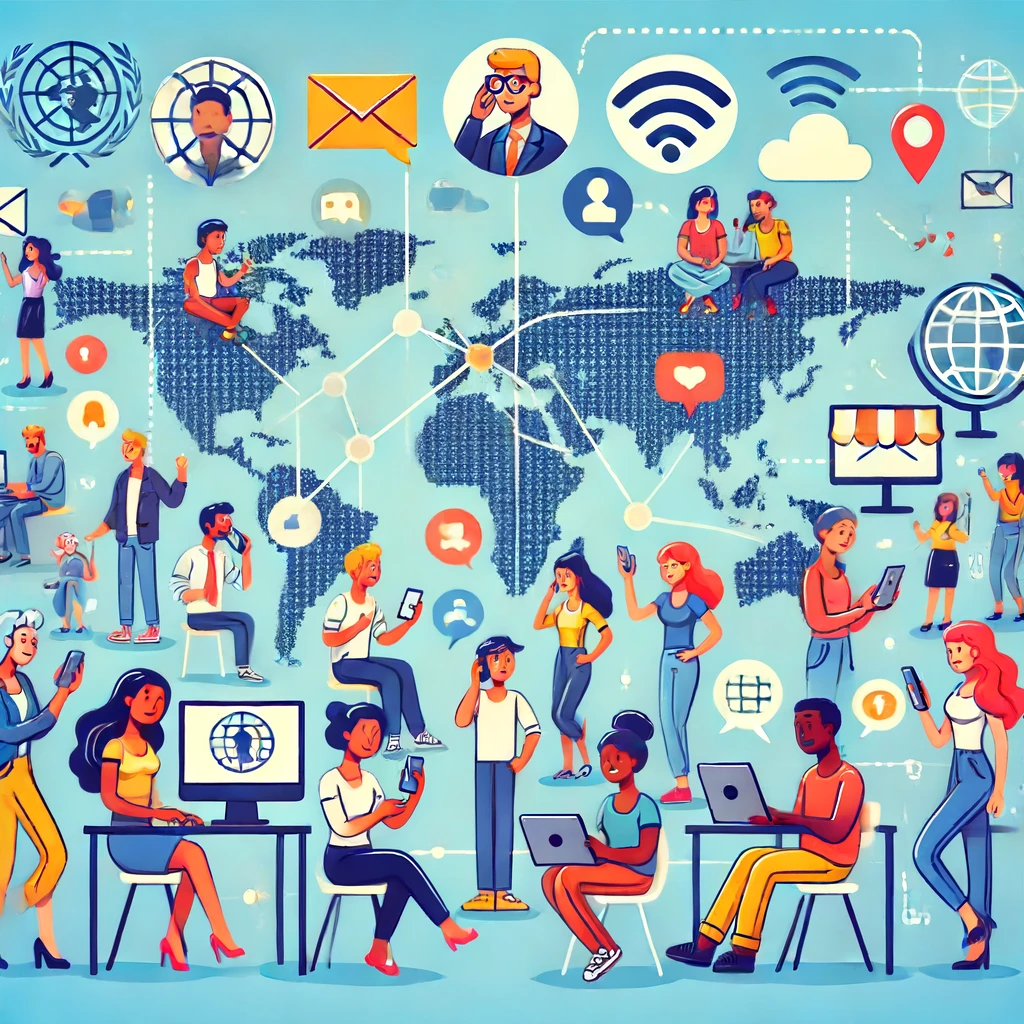
Information Technology (IT) has transformed the way people communicate around the world. From emails and instant messaging to video conferencing and social media, IT has made communication faster, easier, and more efficient. Businesses, governments, and individuals all rely on technology to connect across borders.
The Role of Networking
Networking is the backbone of global communication. The internet, intranets, and cloud systems allow data to travel quickly and securely across continents.
Fiber-optic cables, satellite links, and 5G networks ensure reliable connectivity. This infrastructure enables real-time communication, making it possible for teams in different countries to collaborate seamlessly.
Email and Instant Messaging
Email revolutionized communication by allowing instant messages to replace letters and faxes. Today, instant messaging apps like Slack, WhatsApp, and Microsoft Teams provide real-time interaction.
These tools allow individuals and organizations to share documents, ideas, and updates quickly. They also support group discussions and project management, increasing productivity and efficiency.
Video Conferencing and Collaboration
Video conferencing has become a key feature of modern communication. Platforms like Zoom, Google Meet, and Microsoft Teams connect people visually and verbally, even across thousands of miles.
This technology enables remote work, online learning, and international business meetings. Virtual collaboration tools allow participants to share screens, edit documents in real time, and brainstorm ideas together.
Social Media and Global Connectivity
Social media platforms have created new ways to connect people globally. Facebook, Instagram, LinkedIn, and Twitter allow users to communicate, share information, and build networks instantly.
For businesses, social media is a powerful tool for marketing, customer support, and brand engagement. For individuals, it provides opportunities to connect with diverse communities and cultures.
Cloud Computing and Data Sharing
Cloud technology has made sharing and accessing information easier than ever. Documents, databases, and multimedia files can be stored and accessed from anywhere.
This capability supports international collaboration, as teams can work on the same files simultaneously. Cloud services also ensure data security, backup, and efficient resource management.
Impact on Business and Education
IT has transformed global business and education. Companies can operate worldwide, communicate with clients in real time, and manage remote teams effectively.
In education, online courses, virtual classrooms, and digital resources allow students to learn from anywhere. This global reach enhances knowledge exchange and cultural understanding.
Conclusion
IT has fundamentally changed global communication. Networking, email, instant messaging, video conferencing, social media, and cloud computing have made it faster, easier, and more efficient to connect with people worldwide.
By breaking down geographical barriers, IT fosters collaboration, innovation, and understanding across borders. As technology continues to evolve, it will further enhance how humans communicate and interact in a connected world.


